
1. Runaway truck ramp/ emergency escape ramp
This is traffic device found on highways that traverse steep downgrades that enables vehicles which are having braking problems to safely stop. It is typically a long, sand- or gravel-filled lane connected to a steep downhill grade section of a main road, and is designed to accommodate big rigs such as large trucks or buses. The ramp allows a moving vehicle’s kinetic energy to be dissipated gradually in a controlled and relatively harmless way, helping the operator to stop it safely without a violent crash.
Research has shown that this technique is more effective in stopping vehicles when rounded gravel from riverbeds is used, rather than crushed gravel
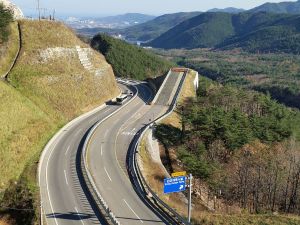
Emergency escape ramps are usually located on steep, sustained grades, as in mountainous areas. Long descending grades can allow high vehicle speeds to be reached, and truck brakes can overheat and fail through extensive use. The ramps are often built before a critical change in the radius of curvature of the road, or before a place that may require the vehicle to stop, such as before an intersection in a populated area. The placement criteria can vary from one region/country to another.

Roads are designed with broad shoulders and open zones to give vehicles a safe place to travel if they stray from the pavement.
putting in rumble strips and other pavement markers to warn vehicles when they cross over into another lane.
Using physical obstacles such as guardrails, median barriers, and others to divide opposing lines of traffic and lessen the possibility of head-on collisions.
installing traffic signals, roundabouts, and other traffic control equipment to assist in regulating traffic flow and lowering the probability of collisions.
Installing reflectors, reflecting pavement markings, and other visual aids will help make crossroads and other low-vision situations more visible.
roadways should be designed with gradual curves and ample sight distances to provide vehicles enough time to react to risks.
ensuring that the pavement is smooth, the lanes are clearly defined, and the roadway is in good shape.
putting in place traffic calming measures to slow down vehicles and lessen the severity of accidents, including speed bumps and traffic circles.
establishing secure crossings for bicycles and pedestrians, such as bike lanes and marked crosswalks.
implementing ITS (intelligent transportation systems) technologies to increase road safety, such as networked and driverless vehicles.
 Engineer's Log